
How to make work friends
What I learned from camping with a bunch of 7-year-old Girl Scouts this weekend

Do you enjoy this newsletter? Please forward to a friend!
“Sophia, where’s your buddy? EMMA, WHERE IS YOUR BUDDY? Harper, come on, WHERE IS YOUR BUDDY???”
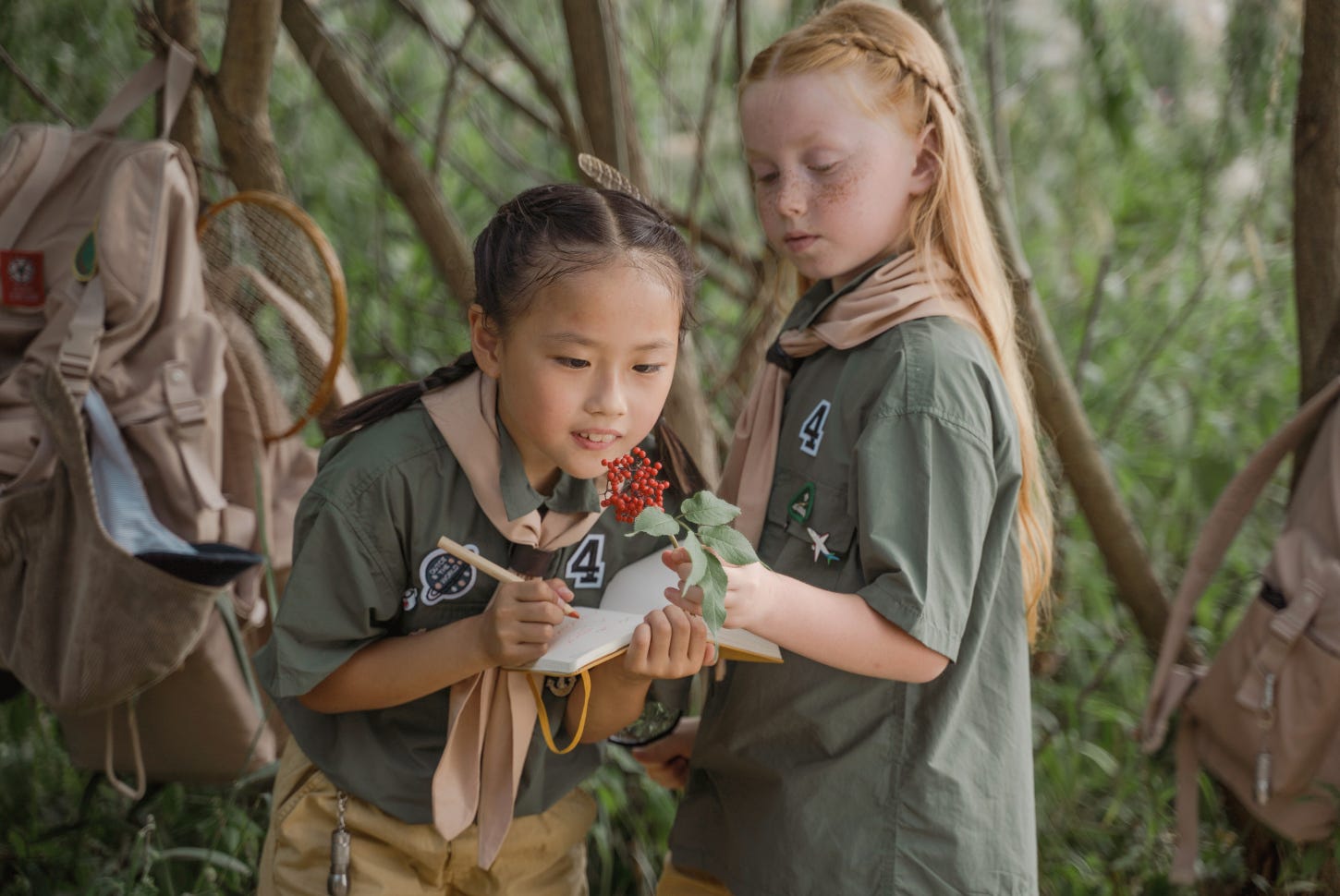
This weekend, I took 11 first, second, and third graders camping with my Girl Scout troop. We did all the classic stuff: hiking, campfire songs, s’mores, giving rocks names and throwing them into the creek (not classic, but somehow their favorite activity).
Girl Scouts uses the Buddy System to keep everyone safe. Girls are paired up, and they’re supposed to stick together all weekend long. In theory, it’s brilliant. No one wanders off alone, everyone’s accounted for, the adults don’t lose their minds.
But getting these scouts to actually stay with their buddies became my entire weekend. Every five minutes, someone had drifted away.
One was looking for her coat while her buddy examined moss.
Another was walking face-first into a blackberry bramble while her buddy dubbed her newest pebble “Rock Obama.”
I spent more time reuniting buddies than I did enjoying the fall foliage.
In the warmth of the campfire, I got to talking with the other adults about why it’s so hard for kids to remember something this important. And we realized: it’s not just kids. As adults, we forget this lesson too. We try to navigate crises alone. Navigate job troubles alone. Make major decisions alone.
Life is overwhelming. Trying to do it alone is actually impossible.
This is especially important at work, where we typically have less autonomy and more unasked-for pressure than we do in other facets of our lives.
Feeling alone at work is the worst
I don’t have to tell you that work can be immensely stressful.
Professional environments that breed stress, like workplaces that reward bad behavior, interpersonal competition, and constant availability, can be especially lonely. These companies create a situation where it’s hard to trust anyone.
But in any stressful environment, having friends—people you can actually trust—is crucial. They don’t have to be people you want to have dinner with or rent a beach house with, but knowing you have 1-2 people at work who understand you and have your back makes the craziest bullshit a lot easier.
Personally, the jobs I’ve hated the most were the ones where I didn’t have a single friend.
You can make work friends
Let me start by saying that if you’re in one of those really toxic environments I described before, it may be really tough to find even one person you can trust. This isn’t because of you (or your likability or social skills), but because the company culture doesn’t allow it. If you’re in this situation, it may be time to start thinking about your next move.
But if you’re in a more reasonable workplace and you feel lonely, there are three ways you can take to start building trust with your colleagues and figuring out who you click with.
Find a common enemy
Doesn’t have to be an actual person, though sometimes there’s a clear villain or two or three in your workplace. Maybe your shared enemy is a sudden change to project scope, or a seemingly impossible deadline, or needing buy-in for your great idea.
I made a great work friend when we had to work together to pull off a major advertising campaign in just a few weeks. Sure felt like that meeting that deadline was our enemy, and figuring out how to launch in time galvanized us as work friends.
Look for shared values
In an increasingly polarized America, we can’t assume anything about what people believe and what matters to them. Look for clues about which of your colleagues may share your values. You might hear them offhandedly talking about volunteer work similar to how you spend your free time or their involvement in a community you care about. Maybe you share the same objections or support for a specific project.
Another one of my work friendships developed because we shared a similar worldview about the importance of quality healthcare for all and the structural changes needed to make that happen.
Sneak in non-work-related conversations
If you’re in the office, ask the person to walk over to the break room or a nearby cafe to get coffee together. This is a quick way to chat with someone you think could be a potential work friend. Once you think you can sustain a longer conversation, grab lunch together.
If you work remotely, try adding a little chitchat at the beginning or end of a call. At a previous job, we called this “boat talk,” I think because a few of my colleagues were boat guys and liked to talk about various jet skis and sailboats or whatever? Even though I’m not a boat guy, boat talk led to some strong friendships.
Finding your work buddy
Just like my Girl Scouts found out this weekend, finding and keeping a buddy requires focus and patience. It won’t happen overnight, but if you put in the time, I bet you’ll find someone you click with.
By Sunday afternoon, my scouts had finally figured out the buddy system. They were sticking together, checking on each other, even helping their buddies pack up their gear. They’d internalized the idea that we’re better together (or maybe they were tired of me asking where their buddy is).
If 7-year-olds can learn this in a weekend, surely we adults can remember it at work. You don’t have to navigate your career alone. Find your buddy. Build those relationships. Once you find your people, work stops feeling quite so lonely—and that makes all the difference.